
Buying in Morocco
Property purchase costs in Morocco, with every source shown
Budget 4 % of the price in registration duty for a built home, plus land registry fees, plus the notary fee. Since 1 July 2026, an additional 2 % duty applies to sales above 300,000 MAD where payment is not traceable. Most pages online have not caught up with this yet, and on a riad purchase it can cost real money.
- →Built home: 4 % registration duty. Bare land, or a property bought to be demolished: 5 %.
- →Land registry: 1.5 % of the price, plus a 100 MAD fixed fee per property. Rate read in the official schedule, not lifted from a blog.
- →A 2 % surcharge above 300,000 MAD if the deed omits the payment terms and references, or if the price was not paid by a traceable method.
- →Mixed payment: the law states the surcharge falls only on the cash portion, not on the whole price.
- →Notary fee: we do not put a number on it, because we could not read the official text. Ask for the written quote before signing.
Verified on
What do you pay on top of the agreed price?
In Morocco the price you negotiate with the seller is not what leaves your account. Three items are always added: registration duty, which goes to the Treasury, land registry fees, which pay for recording the sale against the title, and the notary fee for the deed itself. A fourth appears if an agency was involved.
For a home that is already built, registration duty is 4 % of the price. Buy bare land, or a property acquired to be knocked down and rebuilt, and the rate rises to 5 %. That distinction matters in Marrakech, where many riads are sold as ruins and renovated afterwards.
Land registry fees are the item online pages get most wrong. The official schedule, set by decree, charges an ad valorem duty of 1.5 % of the price to record a sale on a land title, plus a fixed 100 MAD per property, with a minimum charge of 500 MAD.
The 1 % rate you will often read elsewhere is not wrong, it simply covers something else: it is the rate for a first registration application, the operation that creates a land title for a property that had none. Buying a riad that already holds a title does not fall under it. We read both chapters of the schedule to settle the point.
The July 2026 surcharge on untraceable payments
This is the biggest change of the year and it went largely unnoticed. The 2026 finance act added an extra registration duty of 2 %, applying to deeds drawn up from 1 July 2026, on property sales where the price exceeds 300,000 MAD.
It does not fire automatically. Two situations trigger it: either the deed fails to state the terms and references of the payment used, or the price was not paid by one of the payment methods set out in the tax code. So it is not a tax on expensive deals, it is a tax on opaque ones.
The text includes one point we have not seen reported correctly anywhere else: where the price is settled partly in cash and partly by a traceable method, the additional duty applies only to the portion paid in cash. On a purchase where the seller asks for part of the money in notes, that detail changes the bill considerably.
The practical consequence: insist that the deed spells out every transfer, every cheque and every bank reference. That is not paperwork for its own sake, it is what keeps you out of the surcharge.
Why do we put no number on the notary fee?
A sliding scale circulates on many Moroccan sites, always attributed to the same decree. We could not read that official text, and we do not repeat a figure that exists only because pages copy each other. So you will not find a fee percentage here.
What we can say safely: the notary owes you a written quote before signing, and is legally barred from holding your funds. The money passes through a dedicated account, outside their own assets. Ask for the quote, compare, and be wary of any intermediary offering to receive the money themselves.
The total cost therefore depends on a variable only your notary can give you. That is frustrating, but it is the truth, and a page that quotes you an exact total without knowing your file is selling confidence rather than information.
After the purchase, what keeps running?
Buying is not the end of the tax story. If you are a non-resident and funded the purchase from abroad, a declaration must be filed with the Office des Changes within 6 months. This is not a minor formality: it is what preserves your right to transfer the resale proceeds out of the country later.
If you let the property, the 2026 finance act introduced a 5 % withholding on rent paid by a company to an individual, in force since 1 July 2026. Rent received from private individuals falls under income tax, under rules we could not establish from an official source and would rather not summarise loosely.
What we could not verify
Notary fee schedule : A sliding scale circulates on many sites, always attributed to the same decree, but we could not read that official text. So we do not put a number on it. Ask your notary for a written quote before signing.
Estate agency fees : No legal text sets them and we found no reliable figure. This is a negotiation point, not a tariff. Get it written into the mandate.
Transferring rental income abroad : The Office des Changes pages we read cover the transfer of sale proceeds, not the regime for rent collected year after year. We do not fill that gap. Ask your bank and the Office des Changes.
The items at a glance
This table does not replace your notary quote. It tells you what is established, what is uncertain, and why.
| Item | Amount | Level of proof |
|---|---|---|
| Registration duty, built home | 4 % | Converging sources |
| Registration duty, bare land | 5 % | Converging sources |
| Untraceable payment surcharge | 2 % | Official gazette, read directly |
| Land registry | 1.5 % + 100 MAD | Tariff decree, read directly |
| Notary fee | Not quoted here | Official text not consulted |
| Agency fee | Not quoted here | No legal framework found |
The real total depends on your notary quote and on how you settle the price.
Avoiding the 2 % surcharge in four steps
- 1
Pay by a traceable method
Bank transfer or cheque, never a payment whose reference you cannot produce.
- 2
Have the deed spell it out
The notary must record the terms and references of every payment. That is precisely what the law requires.
- 3
Ring-fence any cash portion
If part of the price is settled in cash, have it stated separately: the surcharge will fall on that part only.
- 4
Keep the bank paperwork
You will need it again for the Office des Changes declaration and, later, to transfer the resale proceeds out.
Our houses in Marrakech
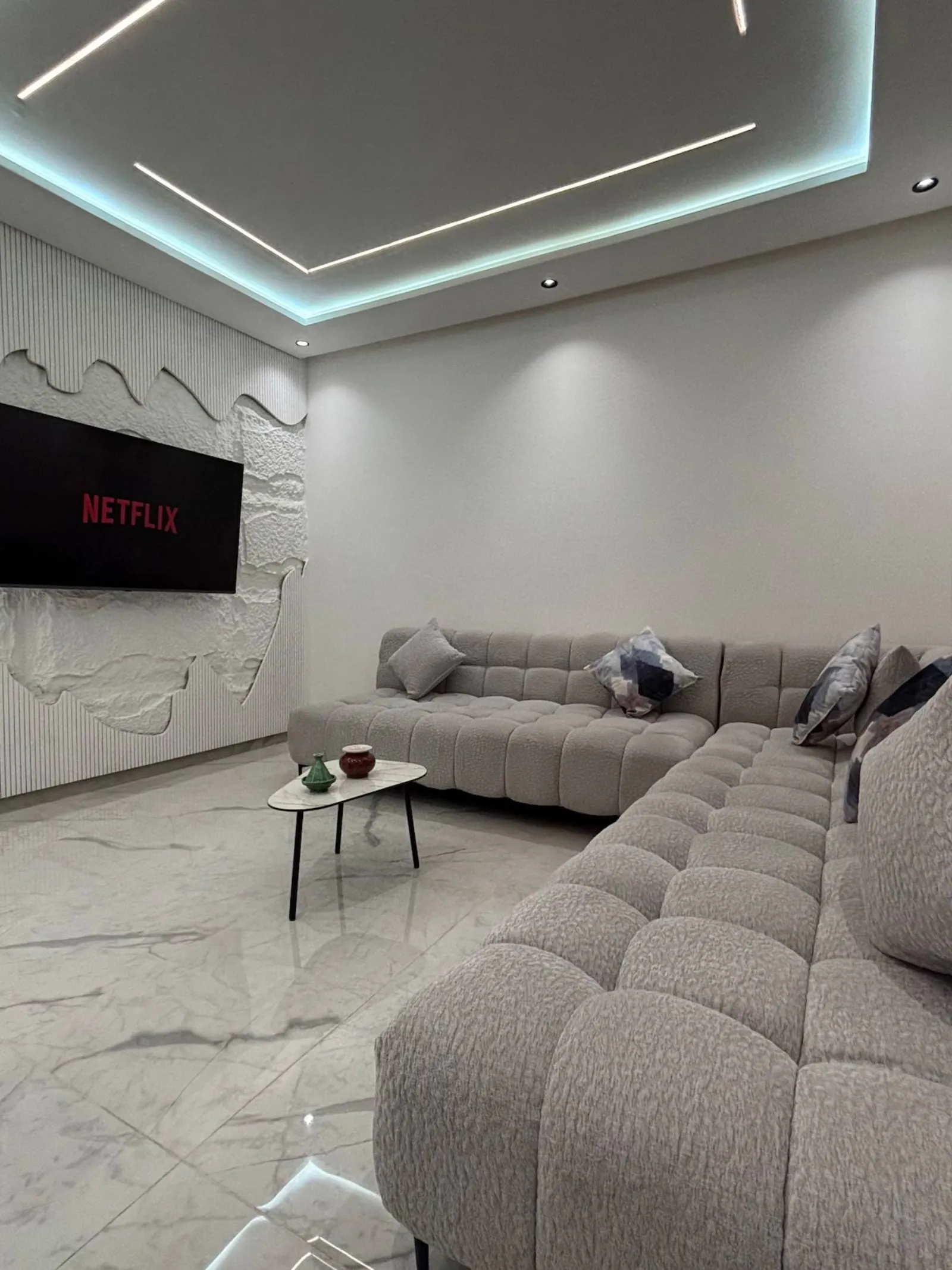
Évasion Chic, Appartement au Cœur de la Ville
📍 Hivernage, Marrakech 40000
Chic, comfortable one-bedroom in a central pool residence, ideal for couples, city breaks and business stays
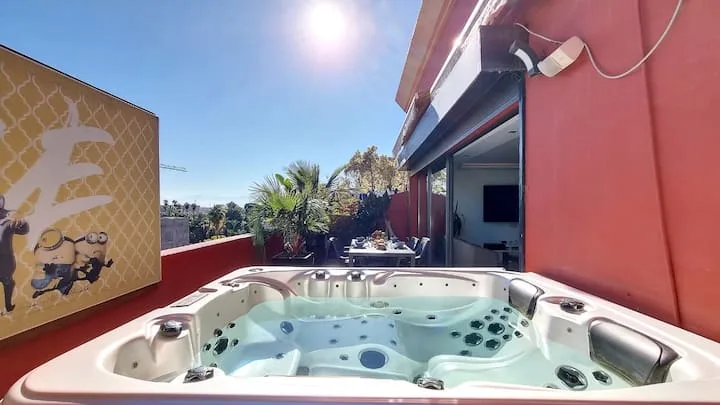
Vue d'Exception & Jacuzzi, Majorelle
📍 Quartier Majorelle, Gueliz, Marrakech 40000
Top-floor 130m² apartment with private terrace jacuzzi and uninterrupted views over the Majorelle gardens
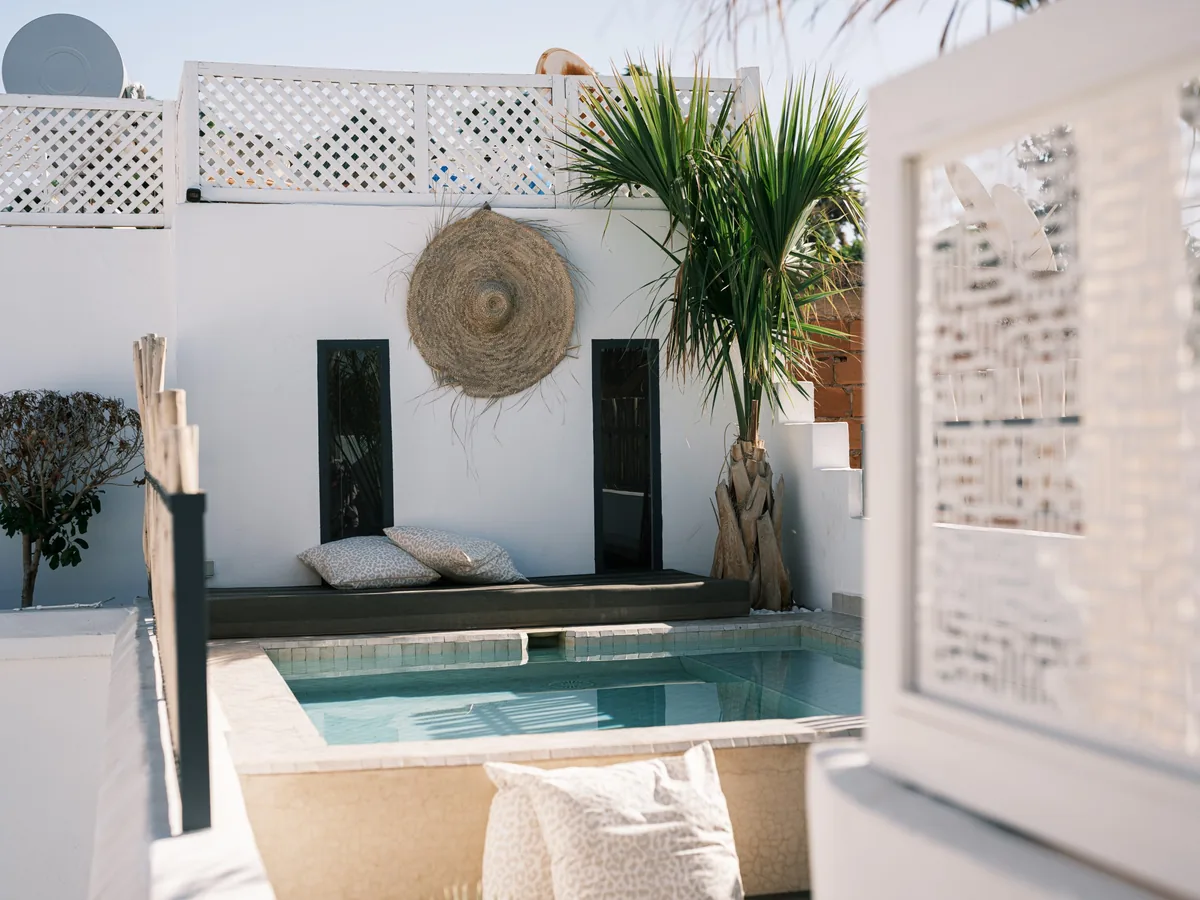 ⭐ Top pick
 Maison Habibi, Dar el Bacha
📍 156 Arset Aouzal, Medina, Marrakech 40000
Whole-riad rental in Dar el Bacha, 4 double bedrooms, sleeps 9, heated rooftop plunge pool and summer kitchen, 12 min walk to Jemaa el-Fna. €313/night direct vs €330 on Airbnb, rated 4.97/5.
Frequently asked questions
What are the costs of buying property in Morocco in 2026? +
For a built home, registration duty is 4 % of the price. Add land registry fees, that is 1.5 % of the price plus 100 MAD per property, and the notary fee, which we do not quote because we could not consult the official text. Since 1 July 2026 an additional 2 % duty applies to sales above 300,000 MAD where the payment is not traceable.
Does the 2 % surcharge apply to every expensive purchase? +
No. It targets opaque transactions, not expensive ones. It applies above 300,000 MAD only if the deed omits the payment terms and references, or if the price was not paid by a method set out in the tax code. A multi-million purchase paid by transfer and properly documented is not caught by it.
If I pay part of the price in cash, does the surcharge hit the whole amount? +
No. The 2026 finance act states that where the price is settled partly in cash and partly by a payment method set out in the code, the additional duty applies only to the portion paid in cash.
Why do you not give the notary fee scale? +
Because we could not read the official text that sets it. A sliding scale circulates on many sites, always attributed to the same decree, but we do not republish a figure that exists only through copying. Your notary must give you a written quote before signing.
Are the duties the same for a ruined riad as for a habitable one? +
Not necessarily. A built home falls under the 4 % rate, while bare land or a property bought to be demolished falls under 5 %. How the deed classifies the property therefore has a direct effect on the bill, and it is worth discussing with the notary before drafting.
Does a foreign buyer pay higher duties than a Moroccan one? +
Registration and land registry duties depend on the nature of the property and the payment terms, not on the buyer nationality. A non-resident buyer does have separate obligations, notably declaring the acquisition to the Office des Changes within 6 months, which governs the later transfer of funds abroad.
Sources and verification date
- Art. 133 du CGI, repris par Deloitte Avocats et Medias24 (4 %, converging independent sources, verified on 2026-07-25)
- Art. 133 du CGI (5 %, converging independent sources, verified on 2026-07-25)
- Bulletin Officiel n° 7465 bis (16-12-2025), art. 133-III du CGI (2 %, official text read directly, verified on 2026-07-25)
- Bulletin Officiel n° 7465 bis (16-12-2025), art. 133-III du CGI (300,000 MAD, official text read directly, verified on 2026-07-25)
- Décret n° 2-16-375, tarif des droits de la conservation foncière (ANCFCC) (1.5 %, official text read directly, verified on 2026-07-25)
- Décret n° 2-16-375, tarif des droits de la conservation foncière (ANCFCC) (100 MAD, official text read directly, verified on 2026-07-25)
- Décret n° 2-16-375, tarif des droits de la conservation foncière (ANCFCC) (500 MAD, official text read directly, verified on 2026-07-25)
- Décret n° 2-16-375, tarif des droits de la conservation foncière (ANCFCC) (1 %, official text read directly, verified on 2026-07-25)
- Office des Changes, formes d’investissement, art. 766 (6, official text read directly, verified on 2026-07-25)
- Loi de finances 2026, analyse Deloitte Avocats (5 %, converging independent sources, verified on 2026-07-25)
Planning a purchase in Marrakech?
We manage riads and apartments directly in Marrakech, we are not an estate agency. If you want to understand a neighbourhood before buying into it, or stay there while you make up your mind, write to us.
Message us on WhatsApp