
Buying in Morocco
Buying property in Morocco as a foreigner: what the law allows, and where it draws lines
A non-resident foreigner can buy residential property in Morocco with no prior authorisation and no residence requirement. It is the simplest regime in Moroccan property law, but it does not cover everything. The moment farmland or rural land enters the picture, the rule flips: sales of rural land to foreigners have been banned since 1973, and only a specific administrative authorisation can lift that ban. Buying a property, on top of that, grants no right to reside there. That is a fully separate file.
- →A non-resident can buy residential property with no prior authorisation and no requirement to live there, according to Moroccan business press.
- →Farmland stays off limits to foreign buyers since 1973 unless a Non-Agricultural Vocation authorisation is granted, and the final certificate only arrives once the project is complete.
- →Buying property grants no residence right: past 90 days of presence a residence permit is required, a file entirely separate from the purchase.
- →A Moroccan bank can lend a non-resident foreigner up to 80 % of the price, against a sworn statement that the buyer owns no other residence in Morocco.
- →Any purchase funded from abroad must be declared to the Office des Changes within 6 months, or the later right to transfer the proceeds abroad is weakened.
Verified on
Can a foreigner buy residential property in Morocco?
For an apartment, a house or a riad, Moroccan business press consistently reports that a non-resident foreigner can buy with no prior authorisation and no residence requirement. That is a secondary source, not a piece of legislation we read directly, and we would rather say so than present it as an exact article of law.
In practice, a buyer from France, the UK or the United States follows the same steps as a Moroccan buyer for a built residential property: negotiation, preliminary agreement, notarised deed, registration against the land title. No ministry, no regional or provincial authority steps in beforehand at this stage.
The nuance that matters: this regime covers residential property. The moment the file touches farmland or rural land, the legal category changes completely, and that is where most foreign buyers get caught off guard.
Can a foreigner buy farmland in Morocco?
The sale of rural land to foreigners has been banned in Morocco since 1973. It is not a dated rule that faded over time, it remains the default. A foreigner cannot simply buy farmland the way they buy an apartment.
The Non-Agricultural Vocation authorisation, the VNA, lifts this ban when the land is intended for a non-agricultural use outside the urban perimeter. It is mandatory for any purchase by a non-national in that situation. Without it, the deal has no solid legal footing.
An important reservation to know before committing: the final VNA certificate is only issued once the project is complete, not at the time of purchase. Between the provisional authorisation and that final certificate, reselling or renting the property out is banned. It is a lock-up period many sellers fail to mention.
Law 62-19 introduced some easing for structured investment projects in this area. We have not read that law as a primary source, so we do not detail its exact conditions here: if your project looks more like a structured investment than a personal purchase, ask a Moroccan lawyer before signing anything.
How do you finance and structure the purchase: loan, company, notary?
On financing, the source is solid: the Office des Changes confirms a Moroccan bank can grant a non-resident foreigner a dirham loan up to 80 % of the price. In return, the bank asks for a sworn statement confirming the buyer owns no other residence in Morocco.
Two vehicles exist for structuring the purchase. A foreign company can operate in Morocco through a branch registered with the Moroccan trade registry. Or a buyer can set up a Moroccan SCI, governed since 2019 by law 31-18 and its implementing decree published in 2024, on condition its purpose stays strictly real estate. We do not quote a minimum capital here: the figure circulating on several sites has no source we could verify.
Whichever structure is chosen, a notarised deed remains mandatory to transfer any real property right, under law 39-08 on the Code of Real Rights and the decree of 22 November 2011. Since law 41-24, published in 2024, even the preliminary agreement and the mandate that precede the final deed must be drawn up, on pain of nullity, either as a notarised deed or as a deed with a certified date drafted by a lawyer admitted to plead before the Court of Cassation. A preliminary agreement scribbled between private parties no longer holds reliable legal weight.
Does buying in Morocco open a right of residence?
This is a point many buyers confuse: owning property in Morocco grants no right of residence whatsoever. The title deed and the residence permit are two administrative files that do not talk to each other.
A foreigner can therefore own a riad in Marrakech and keep entering and leaving the country like any other visitor, within the stay allowed by their visa or visa exemption. Past 90 days of continuous presence, a residence permit becomes necessary, with its own file, its own paperwork and its own timeline, unrelated to the property purchase.
Finally, once the purchase is funded from abroad, the obligation that follows is not to reside, it is to declare. The declaration of the acquisition to the Office des Changes must be filed within 6 months. It does not authorise the purchase, but it preserves, later on, the right to transfer the proceeds of a resale out of Morocco.
What we could not verify
Estate agency fees : No legal text sets them and we found no reliable figure. This is a negotiation point, not a tariff. Get it written into the mandate.
The scenarios at a glance
This table does not replace legal advice. It tells you what is established and what stays uncertain.
| Situation | What the source says | Level of proof |
|---|---|---|
| Built residential property | Purchase allowed with no prior authorisation and no residence requirement | Business press, secondary sources |
| Farmland or rural land | Sale banned since 1973, unless a Non-Agricultural Vocation authorisation is granted | Secondary sources, legal basis not read as primary |
| Moroccan bank loan | Up to 80 % of the price, against a sworn statement of no other residence | Office des Changes, official source |
| Moroccan SCI | Governed by law 31-18 and its 2024 decree, strictly real estate purpose | Law cited, capital not quoted here |
| Residence permit | Not required to buy, needed past 90 days of presence | Secondary sources |
On a structured project (VNA, company), the only reliable contact is a Moroccan lawyer who reads the full file.
Before signing when buying from abroad
- 1
Check the nature of the property
Built residential or farmland: the applicable rule is entirely different, and the second requires authorisation before you even negotiate.
- 2
Keep residence and purchase separate
Do not assume the purchase eases a residence permit application: they are two separate files, each handled on its own.
- 3
Prepare the bank statement
If a local loan is planned, the sworn statement of owning no other residence in Morocco will be requested before any loan offer.
- 4
Use a notarised deed or a certified-date deed
Since law 41-24, even the preliminary agreement must follow this form, on pain of nullity.
- 5
Declare the acquisition to the Office des Changes
Within 6 months of funding from abroad, to preserve the right to transfer proceeds later.
Our houses in Marrakech
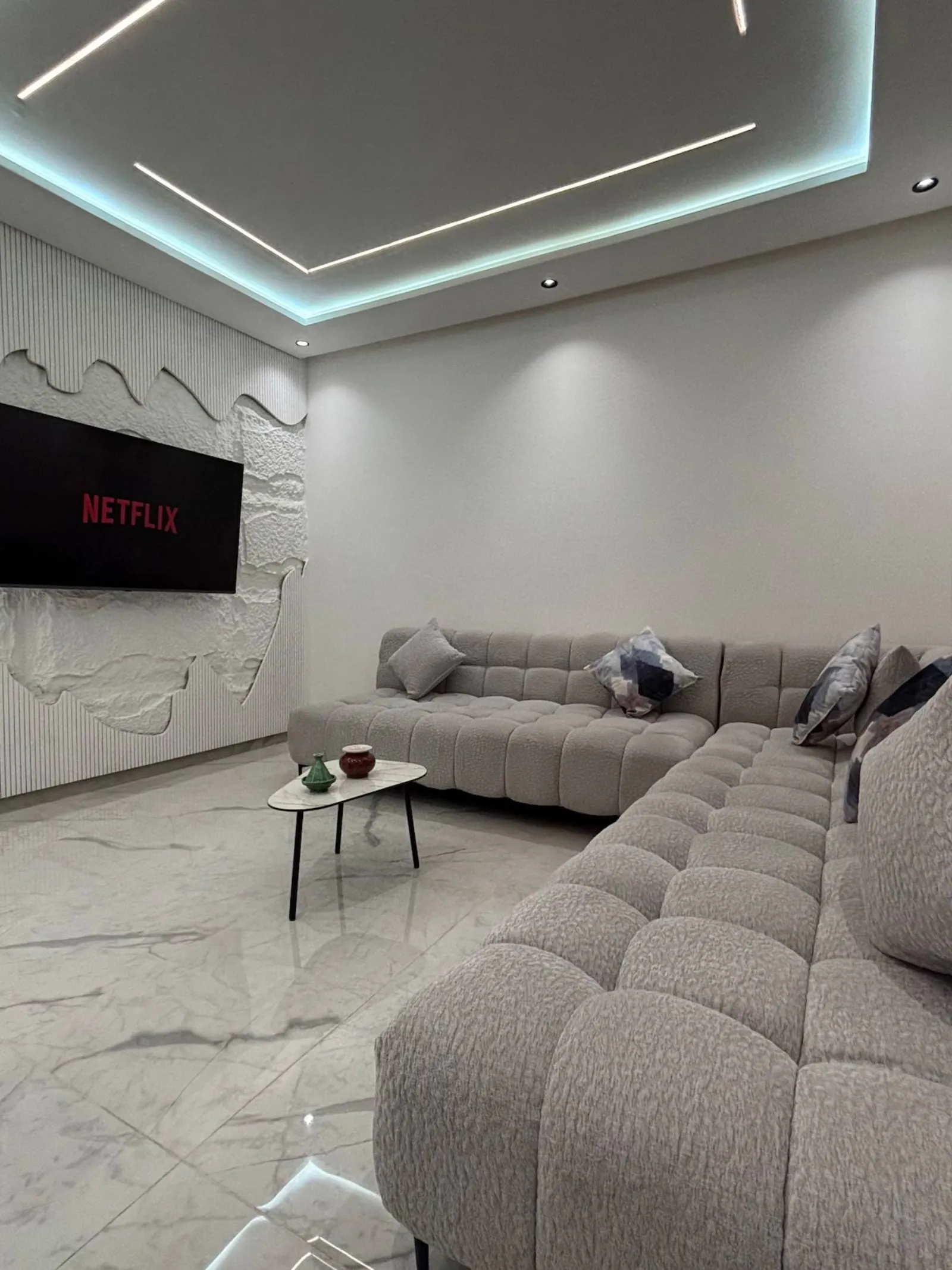
Évasion Chic, Appartement au Cœur de la Ville
📍 Hivernage, Marrakech 40000
Chic, comfortable one-bedroom in a central pool residence, ideal for couples, city breaks and business stays
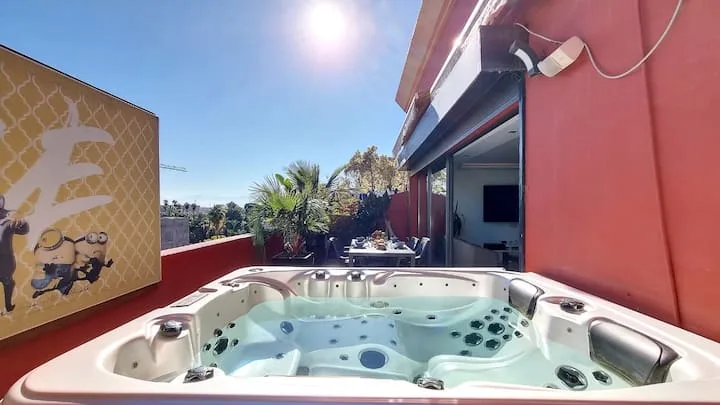
Vue d'Exception & Jacuzzi, Majorelle
📍 Quartier Majorelle, Gueliz, Marrakech 40000
Top-floor 130m² apartment with private terrace jacuzzi and uninterrupted views over the Majorelle gardens
 ⭐ Top pick
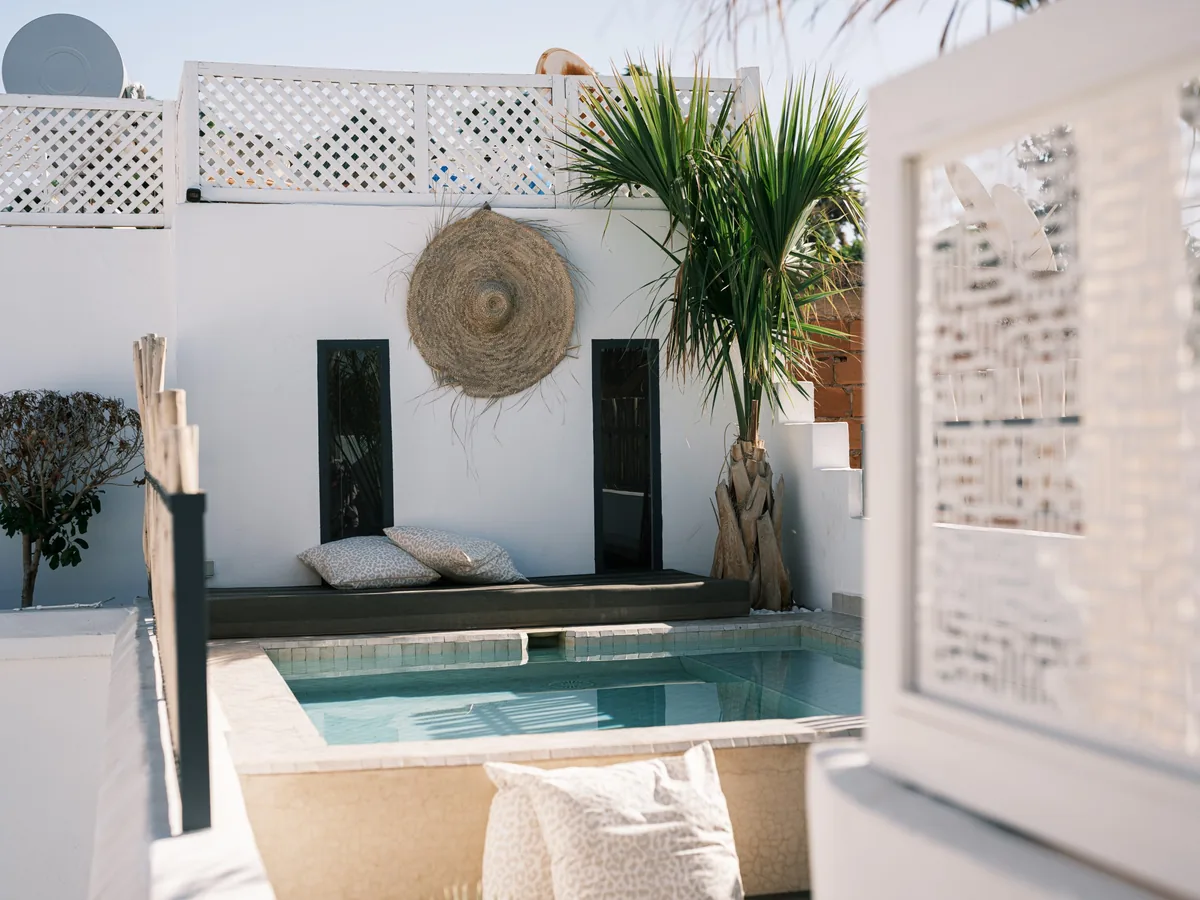
 Maison Habibi, Dar el Bacha
📍 156 Arset Aouzal, Medina, Marrakech 40000
Whole-riad rental in Dar el Bacha, 4 double bedrooms, sleeps 9, heated rooftop plunge pool and summer kitchen, 12 min walk to Jemaa el-Fna. €313/night direct vs €330 on Airbnb, rated 4.97/5.
Frequently asked questions
Can a foreigner buy property in Morocco? +
Yes, for built residential property. Moroccan business press reports that a non-resident foreigner can buy with no prior authorisation and no residence requirement. The rule changes completely for farmland or rural land, whose sale to foreigners has been banned since 1973 unless a specific authorisation is obtained.
Do you need a residence permit to buy property in Morocco? +
No. Buying a property grants no right of residence and requires no residence permit. They are two separate files. Past 90 days of continuous presence in the country, a residence permit becomes necessary, regardless of property ownership.
Can a foreigner buy farmland in Morocco? +
Not directly. The sale of rural land to foreigners has been banned since 1973. A Non-Agricultural Vocation authorisation, mandatory outside the urban perimeter for a non-national, lifts that ban, but its final certificate is only issued once the project is complete. Until then, reselling or renting the property out is banned.
Can a foreigner get a mortgage from a Moroccan bank? +
Yes, according to the Office des Changes. A Moroccan bank can grant a non-resident foreigner a dirham loan up to 80 % of the price, against a sworn statement of owning no other residence in Morocco.
Do you need to set up a company to buy property in Morocco? +
No, an individual can buy in their own name. Two vehicles exist if you prefer to structure the purchase: a branch of a foreign company registered with the Moroccan trade registry, or a Moroccan SCI, governed since 2019 by law 31-18 and its 2024 implementing decree, with a strictly real estate purpose.
What must a foreigner do after funding a purchase from abroad? +
Declare the acquisition to the Office des Changes within 6 months. This declaration does not condition the validity of the purchase, but it does condition the right to later transfer the proceeds of a resale out of Morocco.
Sources and verification date
- Office des Changes, foire aux questions (80 %, official text read directly, verified on 2026-07-25)
- Office des Changes, formes d’investissement, art. 766 (6, official text read directly, verified on 2026-07-25)
- Art. 133 du CGI, repris par Deloitte Avocats et Medias24 (4 %, converging independent sources, verified on 2026-07-25)
Planning a purchase in Marrakech?
We manage riads and apartments directly in Marrakech, we are not an estate agency. If you want to understand a neighbourhood before buying into it, or stay there while you make up your mind, write to us.
Message us on WhatsApp