
Buying in Morocco
The mistakes that cost the most when buying a riad in Marrakech
Most bad surprises on a riad do not come from the negotiated price, they come from what the deed does not say or what the title does not guarantee. A poorly documented payment, a property sold without a land title, an inheritance share nobody checked: these are pitfalls Moroccan notaries know well, but rarely explained clearly to a foreign buyer or a Moroccan living abroad.
- →Since 1 July 2026, an untraceable payment above 300,000 MAD triggers a 2 % surcharge, which falls only on the portion paid in cash.
- →A melkia is not a land title: it rests on witness statements, with no precise boundaries and no systematic record of charges, and a bank will generally not accept it as collateral.
- →Unresolved inheritance shares block a sale until every heir has signed at the notary, and an old riad in Marrakech often has many co-owners.
- →A notary is legally barred from holding your funds themselves, the money passes through the Caisse de Dépôt et de Gestion. An intermediary who offers to receive the money directly is a warning sign.
- →A non-resident financing from abroad must declare the acquisition within 6 months, or risk weakening the exit of funds at resale.
Verified on
Mistake 1: paying without having the deed spell out the payment terms
Since 1 July 2026, an additional registration duty of 2 % applies to sales above 300,000 MAD when the deed omits the payment terms and references, or when the price was not paid by a method set out in the tax code. This is not a tax on expensive deals, it is a tax on opaque ones.
On a riad, where part of the price is sometimes negotiated in cash, this rule changes the bill directly. The text spells out one useful detail: where only part of the price is paid in cash, the surcharge applies only to that portion, not to the whole sale.
The most common mistake is treating payment terms as a detail between you and the seller, settled verbally. Insist the notary records every transfer, every cheque and every bank reference in the deed itself, before you sign anything.
Mistakes 2 to 4: mistaking the property you think you are buying for the title you actually get
Second mistake: buying an untitled property, a melkia, believing it gives the same security as a land title. The land title issued by the ANCFCC is enforceable against third parties and required by banks for a loan. A melkia rests on witness statements, with no precise topographic boundaries and no record of the charges attached to it. Registering it as a land title afterward is a process that takes several years, not weeks.
Third mistake: not checking for unresolved inheritance shares. When the owner dies, a riad passes to all of their heirs, often numerous and sometimes scattered across several countries. Until every co-owner has signed at the notary, the sale stays blocked, even if the person who showed you the property presents themselves as the only decision-maker.
Fourth mistake: mistaking a habous property for full ownership. A habous property is generally reported as a mortmain asset tied to a religious foundation, passed on through a long-term lease rather than sold outright. We stay cautious here, our sources on this point are not primary-level, but it is a classification worth having the notary check before making any offer.
Mistakes 5 and 6: putting money down before the file is secured
Fifth mistake: paying a deposit before ordering the property certificate from the ANCFCC. That document lists the current owners, the exact description of the property, and any charges or mortgages attached to it. It is the only way to know, before committing, whether the seller actually has the right to sell what they are showing you.
Sixth mistake: handing the funds to an intermediary instead of the legal channel. A notary is barred from holding money held on behalf of others themselves, it passes through the Caisse de Dépôt et de Gestion under law 32-09. An agent or intermediary who offers to receive the money directly, outside that channel, is a warning sign that should stop the transaction, not just make you cautious.
Mistakes 7 and 8: what gets forgotten once the deed is signed
Seventh mistake: forgetting the Office des Changes declaration. If you funded the purchase from abroad, this declaration must be filed within 6 months. It does not block the purchase, but skipping it weakens your right to move the money out of Morocco the day you resell.
Eighth mistake: mis-classifying the property in the deed. A built home falls under the 4 % registration duty, while bare land or a property bought to be demolished falls under 5 %. Many riads in Marrakech are sold in an advanced state of ruin: how the deed classifies the property has a direct effect on the bill, and it is worth discussing with the notary before drafting, not after.
What we could not verify
Notary fee schedule : A sliding scale circulates on many sites, always attributed to the same decree, but we could not read that official text. So we do not put a number on it. Ask your notary for a written quote before signing.
Estate agency fees : No legal text sets them and we found no reliable figure. This is a negotiation point, not a tariff. Get it written into the mandate.
Securing a riad purchase in four checks
- 1
The ANCFCC property certificate
Order it before any deposit, to see the real owners and any charges attached.
- 2
The nature of the title
Check whether it is a land title or a melkia, and what that changes for a future loan or resale.
- 3
Unresolved inheritance shares
Make sure every heir or co-owner will sign the deed, not just the person who showed you the property.
- 4
The path of the funds
Go through the notary account at the Caisse de Dépôt et de Gestion, never through an intermediary who offers to receive the money themselves.
Our houses in Marrakech
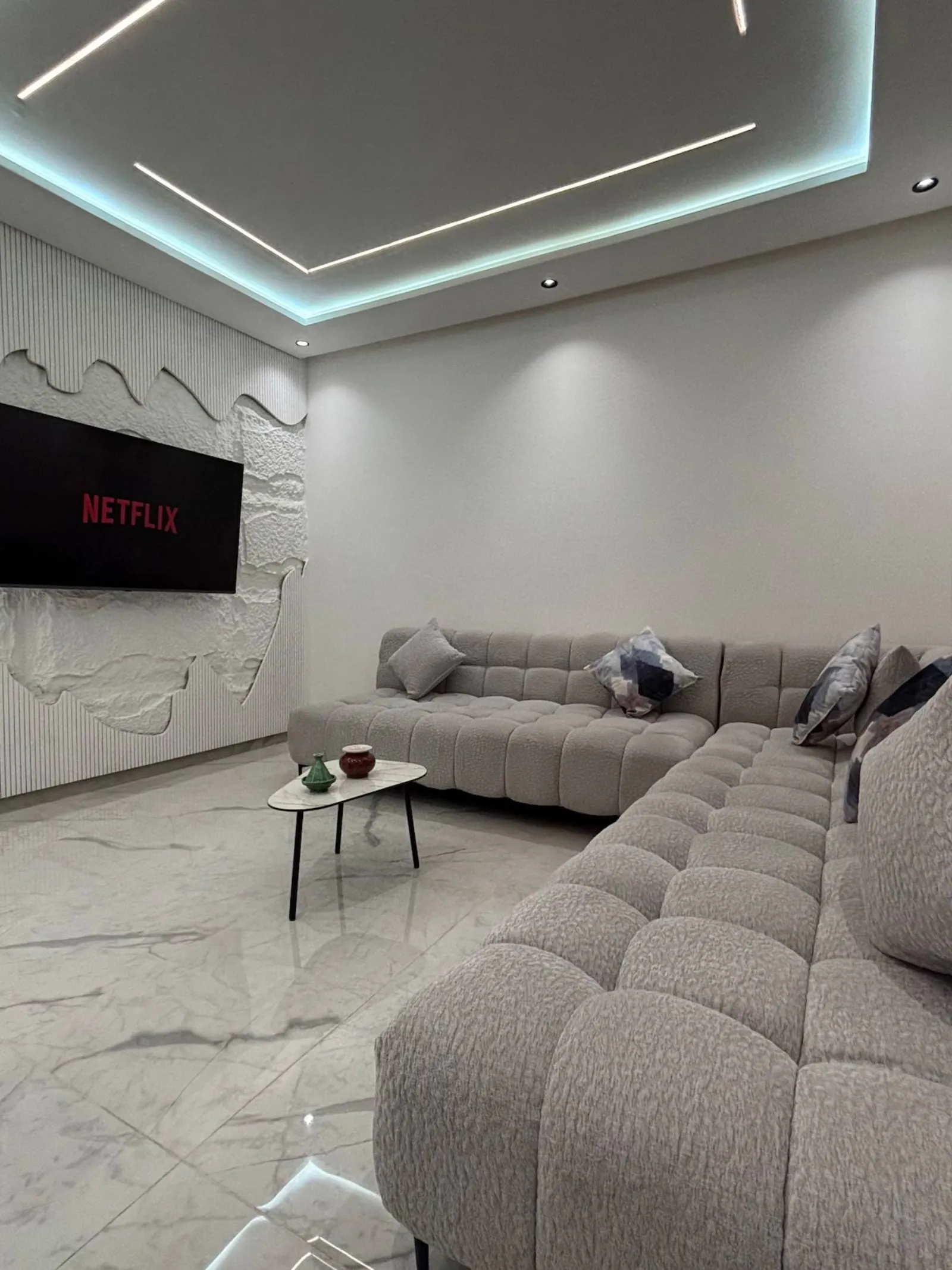
Évasion Chic, Appartement au Cœur de la Ville
📍 Hivernage, Marrakech 40000
Chic, comfortable one-bedroom in a central pool residence, ideal for couples, city breaks and business stays
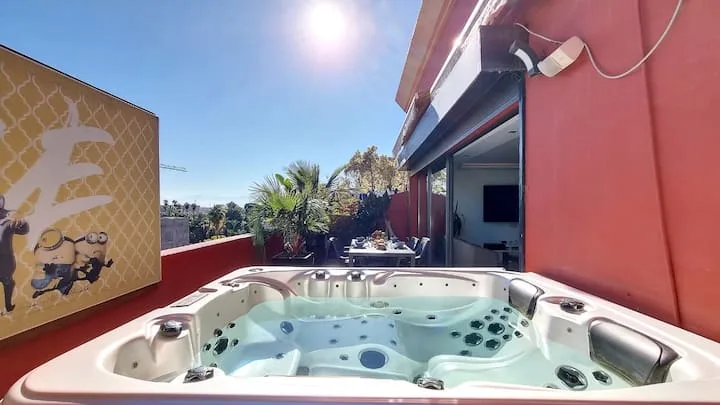
Vue d'Exception & Jacuzzi, Majorelle
📍 Quartier Majorelle, Gueliz, Marrakech 40000
Top-floor 130m² apartment with private terrace jacuzzi and uninterrupted views over the Majorelle gardens
 ⭐ Top pick
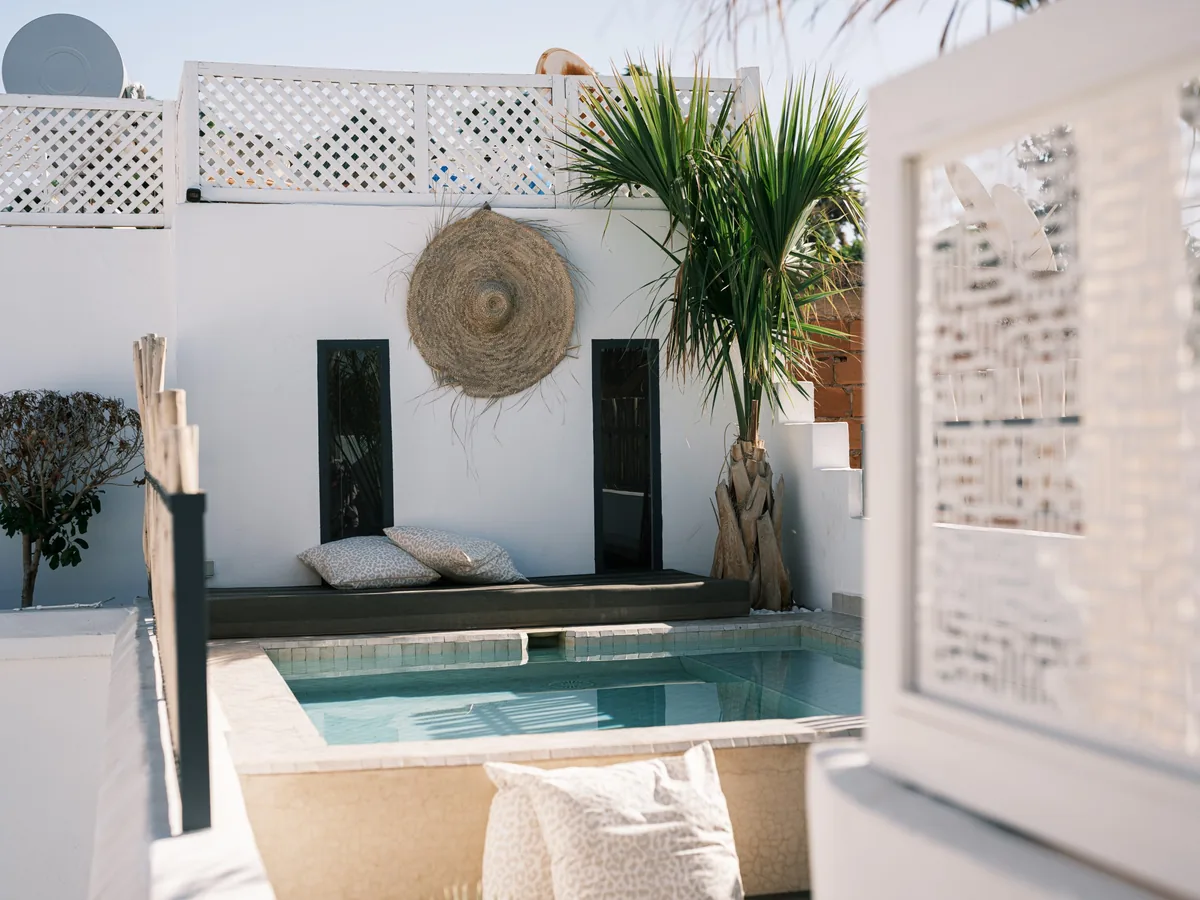
 Maison Habibi, Dar el Bacha
📍 156 Arset Aouzal, Medina, Marrakech 40000
Whole-riad rental in Dar el Bacha, 4 double bedrooms, sleeps 9, heated rooftop plunge pool and summer kitchen, 12 min walk to Jemaa el-Fna. €313/night direct vs €330 on Airbnb, rated 4.97/5.
Frequently asked questions
What is a melkia and why is it not a land title? +
A melkia is a form of proof of ownership resting on witness statements, with no precise topographic survey and no systematic record of charges. The land title issued by the ANCFCC, by contrast, is enforceable against third parties and required by banks for a loan. Registering a melkia as a land title is a process that takes several years.
What happens if the riad I want to buy has unresolved inheritance shares? +
The sale stays blocked until every co-owner, meaning every heir of the deceased owner, has signed the deed at the notary. An old riad in Marrakech often has many heirs, sometimes scattered across several countries, which can seriously extend the timeline of the transaction.
What is a habous property and can it be bought as full ownership? +
A habous property is generally reported as a mortmain asset attached to a religious foundation, passed on through a long-term lease rather than sold outright. The sources available on this point are not primary-level, so have the notary verify the exact classification before making any offer.
Why can a notary not receive the buyer money directly? +
The law requires a notary not to hold funds held on behalf of others themselves. The money passes through the Caisse de Dépôt et de Gestion, under law 32-09. An intermediary who offers to receive the money directly, outside that channel, falls outside the legal framework.
What is the surcharge on untraceable payments since July 2026? +
Since 1 July 2026, an additional registration duty of 2 % applies to sales above 300,000 MAD when the deed does not detail the payment terms, or when the price was not paid by a method set out in the tax code. Where only part of the price is paid in cash, the surcharge applies only to that portion.
Do I need to declare the purchase to the Office des Changes if I finance from abroad? +
Yes, within 6 months of the purchase. This declaration does not block the sale, but skipping it weakens your ability to later transfer the resale proceeds abroad.
Sources and verification date
- Bulletin Officiel n° 7465 bis (16-12-2025), art. 133-III du CGI (2 %, official text read directly, verified on 2026-07-25)
- Bulletin Officiel n° 7465 bis (16-12-2025), art. 133-III du CGI (300,000 MAD, official text read directly, verified on 2026-07-25)
- Art. 133 du CGI, repris par Deloitte Avocats et Medias24 (4 %, converging independent sources, verified on 2026-07-25)
- Art. 133 du CGI (5 %, converging independent sources, verified on 2026-07-25)
- Office des Changes, formes d’investissement, art. 766 (6, official text read directly, verified on 2026-07-25)
A riad in your sights in Marrakech?
We manage riads and apartments directly in Marrakech, we are not an estate agency. If you want to visit a neighbourhood before committing, or stay in a property to test it, write to us.
Message us on WhatsApp